Plant-Based Milk Guide: Oat, Soy, Almond, Coconut, and More
Plant-based milks arrive at the steam wand with a fundamentally different weave than dairy. Where cow’s milk offers a reliable matrix of casein proteins and butterfat — a fabric that stretches and holds — plant milks are emulsions of ground or extracted plant matter suspended in water, each with its own protein profile, fat content, and stabiliser package. Understanding these differences is not a matter of brand loyalty; it is the prerequisite for coaxing any plant-based milk into foam worth pouring.
Why Plant Milks Behave Differently Under Steam
The core challenge is structural. Dairy milk’s caseins are uniquely suited to forming the thin, elastic films that enclose air bubbles in microfoam. Most plant proteins — whether from soy, oat, almond, or pea — are less efficient at migrating to the air-water interface and stabilising it. The result, in a poorly chosen or poorly steamed plant milk, is foam that rises quickly into large, fragile bubbles and then collapses within seconds, leaving a flat, watery pitcher with a raft of dry froth on top.
Fat plays a complementary role. In dairy, emulsified fat globules nestle between protein films and lend body and slow drainage. In plant milks, the fat source varies wildly — rapeseed oil, coconut oil, sunflower oil — and is held in suspension by added emulsifiers like sunflower lecithin or gellan gum. These stabilisers are the hidden variable. A plant milk formulated for drinking may foam poorly, while a “barista” formulation of the same base ingredient, adjusted with different fat levels and stabilisers, can produce foam that approaches whole milk in texture and pourability.
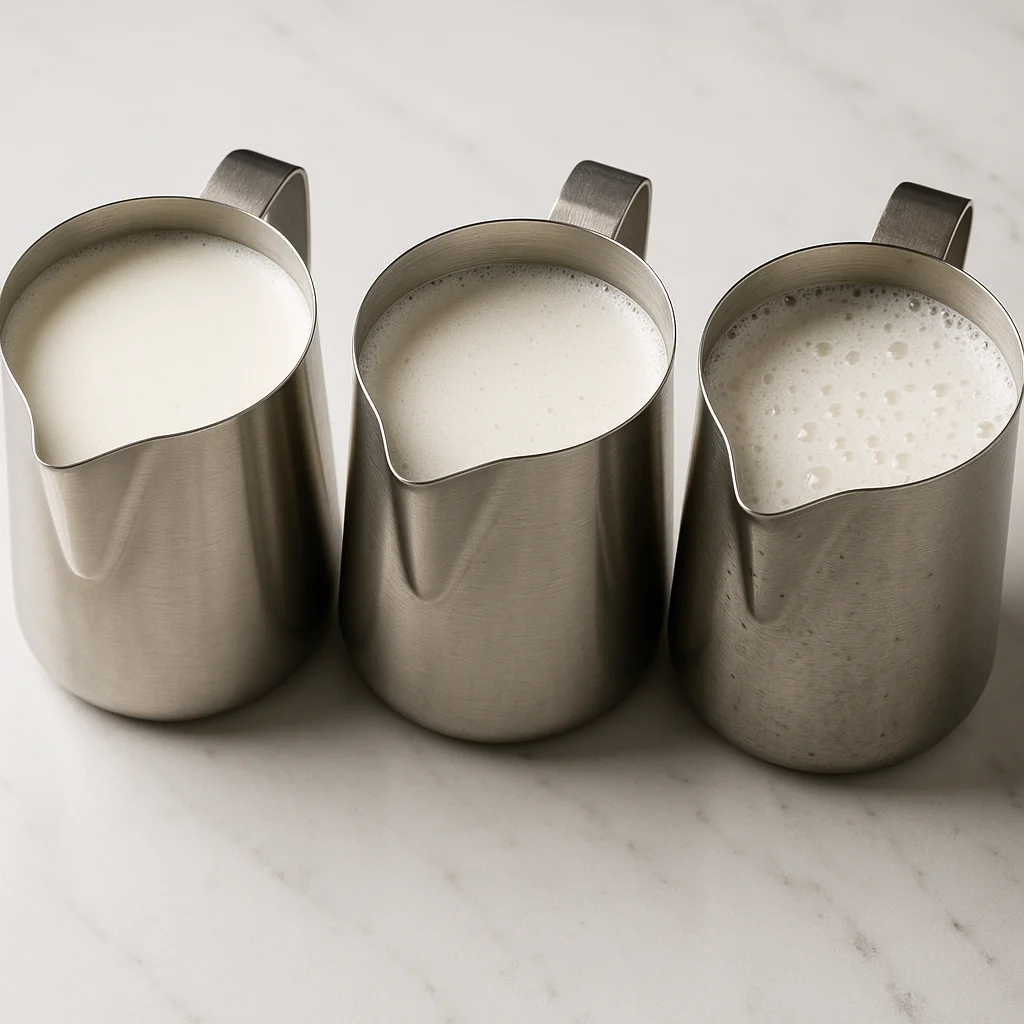
Milk-by-Milk Breakdown
Oat milk has become the default plant milk behind many coffee bars, and for good reason. Its relatively high starch content contributes viscosity that mimics the body of dairy, and barista-formulated versions from producers like Oatly, Minor Figures, and Califa Farms include added fat and acidity regulators that help protein films hold together. The grain of good oat foam is slightly looser than dairy microfoam — the bubbles are a fraction larger on average — but it polishes well and pours with enough flow and contrast for detailed art. Sweetness is naturally higher than dairy, which can be an asset or a distraction depending on the espresso.
Soy milk is the oldest plant-based option in espresso and, in many ways, still the most structurally capable. Soy protein is globular and surface-active, meaning it migrates to bubble walls with reasonable efficiency. Well-made soy milk produces tight, glossy foam that holds its shape. The persistent risk is curdling: soy proteins denature and coagulate when they encounter the acidity and heat of espresso, especially if the milk is overheated past roughly 65°C. Steaming to a lower finishing temperature and pouring into the crema promptly — rather than letting the milk sit — reduces this dramatically. A deeper discussion of protein behaviour under heat is available on the milk chemistry page.
Almond milk is the most difficult mainstream option. Its protein content is low — often below one gram per hundred millilitres — and almond fat does not emulsify as readily as oat or soy. The foam it produces tends to be thin, airy, and quick to separate. Barista versions improve matters with added stabilisers, but even the best almond foam has a shorter working window before it begins to drain and lose its painted-silk surface.
Coconut milk (the carton variety, not canned cream) foams into a soft, pillowy texture that can feel luxurious but lacks the structural rigidity needed for fine-line latte art. It is better suited to drinks where a smooth cap of foam matters more than a detailed rosetta.
Other Emerging Options
Pea protein milks, hemp milks, and macadamia milks occupy a smaller but growing niche. Pea protein, in particular, shows promise — its foaming behaviour under steam is closer to soy than to almond, and several barista formulations have emerged that steam with surprising compliance. Hemp and macadamia tend toward the coconut end of the spectrum: pleasant body, limited structural integrity.
The essential lesson across every plant milk is that formulation matters more than the base ingredient alone. Two oat milks from different producers can behave as differently under steam as oat and almond. When foam problems arise with a plant-based milk, the troubleshooting guide can help distinguish technique failures from ingredient limitations, and the steaming technique page covers the adjustments — particularly around stretching duration and finishing temperature — that plant milks often demand.